+ points earned!
What Are Non-Medical Pain Relief Options for The Elderly?
- 24 July 2026
- Home Nursing Foundation
Growing older tends to bring more wisdom, but it also comes with a few physical changes. When paired with long-term medical conditions, symptoms such as giddiness and pain can occur more frequently. Giddiness increases the risk of falls, and pain can affect their quality of life.
As caregivers, we may often reach for pain relief medication to quickly soothe symptoms. Paracetamol is a well-known painkiller frequently prescribed or bought over-the-counter to soothe headaches and muscle pain. However, medication can take some time to reach its full effect.
In these moments, you might naturally look for non-medicinal ways to offer immediate comfort. Maybe you already use familiar household favourites like Tiger Balm or Axe Brand oil to help with headaches and giddiness. These are suitable methods for soothing everyday aches and pains in older adults. By combining these methods with gentle care and small adjustments to your loved one’s environment, you can help ease mild symptoms and help them feel better.
Warning Signs That Require Medical Attention
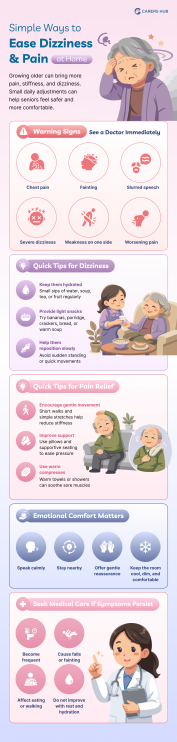
Even though mild giddiness and pain are a natural part of ageing, some symptoms can indicate more serious medical conditions. Your loved one should see a doctor as soon as possible if you notice these:
- Sudden severe dizziness
- Chest pain
- Fainting
- Slurred speech
- Weakness on one side
- Persistent or worsening pain
What should I do if my loved one feels dizzy?
The first thing to check should be whether they’ve eaten a meal and taken enough water. Hydration and nutrition are usually the first form of support for someone experiencing giddiness.
Even if your loved one drinks water regularly, they might still be mildly dehydrated. Hot weather and illness can increase sweating and urination, leading to a loss of important electrolytes. Furthermore, they might not ‘feel’ thirsty (due to the reduced sense of thirst in old age), and hence drink less water than they actually need. Even mild dehydration can reduce blood volume and trigger giddiness.
Tip #1: Encourage consistent hydration
- Encourage small frequent sips instead of large amounts: Taking lots of water at once can be heavy and uncomfortable on your loved one’s stomach. Plus, the body may not be able to process so much water at once, meaning the excess is passed out as urine. Keep a water bottle nearby and encourage small sips throughout the day to ensure their body is actually absorbing the moisture. You might find it helpful to get a water bottle with time markers and little encouragements. It breaks their daily goal into smaller, manageable sips.
- Go for room-temperature fluids: Water that’s too cold or hot can be unpleasant to drink. Choose room-temperature or slightly warm water, which is gentler on the stomach and more comforting to drink throughout the day.
- Add hydrating foods and drinks: Clear soup, tea, or fruits are great sources of water too. Drinking plain water all day can get boring, and your loved one might prefer something with flavours to break up the monotony. Consider boiled chicken soup, congee, chamomile tea, barley water with a little sugar, and juicy fruits like watermelon, papaya, or grapes.
- Avoid excess caffeine and sugary soft drinks, as these can affect sleep and blood glucose levels.
Tip #2: Provide easy-to-eat foods for snacks
If your loved one doesn’t eat much due to a lack of appetite or fatigue, their blood sugar levels can dip. This sudden drop in energy is a common trigger for waves of giddiness and weakness.
Instead of pressuring them to finish three large meals, encouraging small, gentle snacks throughout the day helps keep their energy levels steady.
Consider easy-to-eat foods that are light on the stomach such as:
- Crackers: Try classic favourites like Marie biscuits, digestives, or cream crackers. You can also add a little jam, kaya, or thin slices of cheese for flavour.
- Porridge: Chicken, fish, or vegetable porridge is easy to swallow and an excellent choice if your loved one feels too tired to eat a full meal.
- Bread: A simple slice of bread provides energy - choose wholemeal bread as it contains more vitamins and minerals. They can dip it into a hot beverage, such as warm milk or tea, to make it softer and easier to chew.
- Bananas: This fruit is soft, sweet, and rich in nutrients. They make great snacks for watching TV or a tea break.
- Warm soup: Clear soup with meat and vegetables provides both nutrition and hydration.
Tip #3: Help reposition them gently
Sudden movements can worsen dizziness and balance. If your loved one feels giddy after moving to lie down or sit up, help them to slowly change their position.
- If they feel dizzy while sitting or lying down: Help them lean slightly back against the backrest or wall, while supporting their head. Ensure they keep their feet flat on the ground and avoid sudden head movements. If they want to lie down, use a pillow to prop up their back first, then gradually help them lie flat.
- If they feel dizzy when getting up: Use a pillow to slightly elevate their head. Help them turn slowly onto one side, gently guide their legs off the edge of the bed, then help them sit upright. Wait for a while before helping them stand with support.
This guide provides more detailed instructions to help transfer an elderly person or someone with an illness or disability.
What should I do if my loved one feels pain?
Mild pain and aches can result from stiffness. The key is to encourage safe, light movement that gently stretches their muscles and relieves stiffness.
Tip #1: Encourage gentle, consistent movement
Your loved one may not want to move around much because of muscle pain. But staying completely still, such as lying in bed or sitting in front of the TV all day, can sometimes increase stiffness and the pain they’re trying to relieve.
These types of movement can help them avoid stiffness and aches:
- Change position regularly: Start by encouraging them to change their sitting or lying position regularly. For example, you could help them turn onto their side for a while every hour. Getting up every few hours for a light meal or toilet break may also help relieve back pain in old age.
- Short supervised walks: If they’re able to walk, you can help them take short walks around the living room, HDB corridor, or void deck.
- Wrist, shoulder, and ankle rotations: Gently guide them through simple rotations of their wrists, shoulders, and ankles.
- Arm circles: You can also help them slowly extend their arms and make small, controlled circles to engage the muscles.
Check with your loved one’s doctor about slowly introducing them to simple stretches suited for seniors. Find step-by-step exercises to help improve flexibility here.
You may also refer to our resource hub for downloadable guides on how to help your loved one move safely, do supervised bed exercises, and more.
Tip #2: Make simple adjustments for pain relief while seated or lying down
- Support their body: Place a rolled towel or pillow under their knees or lower back when they are seated or lying down. This relieves pressure on the spine and helps relax muscles.
- Reclined seating: This shifts body weight and relieves spinal pressure. It’s recommended for pressure sore prevention in the elderly at home.
Tip #3: Use warm showers and heat packs for pain relief
In addition to using oils and balms for pain relief, you can also try warm compresses. Wet a small towel with warm water and wrap or press it around sore arms and joints. A warm shower can also help relieve stiffness and bring physical comfort. Remember not to use water that’s too hot.
My loved one is in distress because of discomfort. How can I help them?
Giddiness and pain can be a scary experience for seniors. They may worry about falling down, or feel anxious that it means their body is getting weaker. Some of them may question why they feel more pain with age.
For loved ones living with existing health conditions, these sudden symptoms can also bring up fears that their illness is worsening.
Tip #1: Provide emotional reassurance
As their caregiver, you can help by providing steady emotional reassurance.
- Speaking in a calm voice and avoiding any signs of panic can help ease their fear.
- Sit closely and stay physically nearby so they can feel your presence.
- Talking to them about something can help take their mind off the discomfort.
- Gently holding their hand or placing a reassuring hand on their shoulder can let them know they are safe and that you are right there to support them.
Tip #2: Guide them through relaxation techniques to ease tension
Stress and anxiety about symptoms can increase muscle tension, possibly worsening pain and discomfort. Helping your loved one relax can prevent physical symptoms from worsening.
Slow, controlled breathing can help them feel calmer when they feel dizzy. This guide provides steps for soothing anxiety with breathing exercises.
Tip #3: Adjust the environment to make it more conducive
The environment around your loved one could be a source of stress. Bright lights and heat can worsen discomfort and dizziness. These adjustments can help:
- Improve ventilation: Keep the fan switched on, and consider opening the windows to allow better airflow for a less stuffy environment
- Lower the room temperature: Switching on the fan or air conditioner and drawing the curtains can help keep the room cool.
- Dim lighting: Use a small bedside lamp instead of harsh overhead lighting, as a darker environment helps the body relax.
- Provide proper support: Ensure your loved one’s resting area (sofa, seat, and bed) has comfortable support. Choose chairs with proper seating support, and provide pillows for back and limb support.
- Look for chairs with firm, high-density foam rather than deep, plush cushions. If possible, try to get one with lumbar support (a type of cushioning design that aligns with the natural spine curve) and armrests.
- For pillows, choose full-body pregnancy pillows or long bolsters to support their body when sleeping on the side.
- A wedge pillow can prop up the upper body and head when lying down, which may help ease breathing difficulties.
- A small cylindrical neck pillow can help cradle the neck while lying down or sitting on the sofa.
What if the pain and dizziness don’t improve?
Despite our best efforts, dizziness and pain can sometimes require medical attention. Don’t over-medicate to relieve pain. See a doctor if the symptoms:
- Persist longer than 3 days for dizziness and 3-5 days for joint pain
- Become more frequent (dizziness and/or pain present on most days or daily for 3 months or more)
- Worsen suddenly
- Interfere with walking or eating
- Cause falls or fainting
- Do not improve with rest, proper nutrition, and hydration
While HNF doesn't officially endorse or sponsor any specific brands, we’ve included a few examples as a helpful starting point. Feel free to use whatever brands work best for you.
References:
https://www.webmd.com/healthy-aging/what-to-know-about-dizziness-in-older-adults
https://www.healthline.com/health/can-dehydration-cause-vertigo
https://massivebio.com/nutrition-tips-for-dizziness-bio/
https://www.sleepfoundation.org/aging-and-sleep
https://www.healthxchange.sg/how-to-manage/essential-guide-to-high-blood-pressure/orthostatic-hypotension-postural-hypotension
https://www.nia.nih.gov/health/safety/hot-weather-safety-older-adults
https://www.webmd.com/brain/home-remedies-vertigo https://www.medicalnewstoday.com/articles/vertigo-exercises#exercises
https://www.healthdirect.gov.au/dizziness
https://ambienthomecare.com/how-to-treat-dizziness-in-your-elderly-loved-one-at-home/
https://www.affairs.sg/blogs/information/how-to-help-elderly-get-in-and-out-of-bed-safely
https://eastlakealf.com/10-safe-and-effective-exercises-for-senior-wheelchair-users/
https://thocc.org/about/news-press/news-detail?articleId=68440&publicid=395
https://www.vivid.care/insights/product-news/care-chairs-people-pressure-ulcers/
https://trippfamilymedicine.com/5-tips-for-taking-care-of-a-sick-family-member-at-home/
https://medicine.utah.edu/neurology/education/dizzy-school/finding-answers
https://uspainfoundation.org/wp-content/uploads/2024/08/FINAL.2024-CHRONIC-PAIN-FACT-SHEET.pdf
You may also like
How to Support the Mood Changes of Your Loved One
Never Miss a Dose: Medication Schedule Management Tips for Caregivers + Free Template