+ points earned!
Understanding Dementia and Its Impact
- 15 January 2026
- Admin
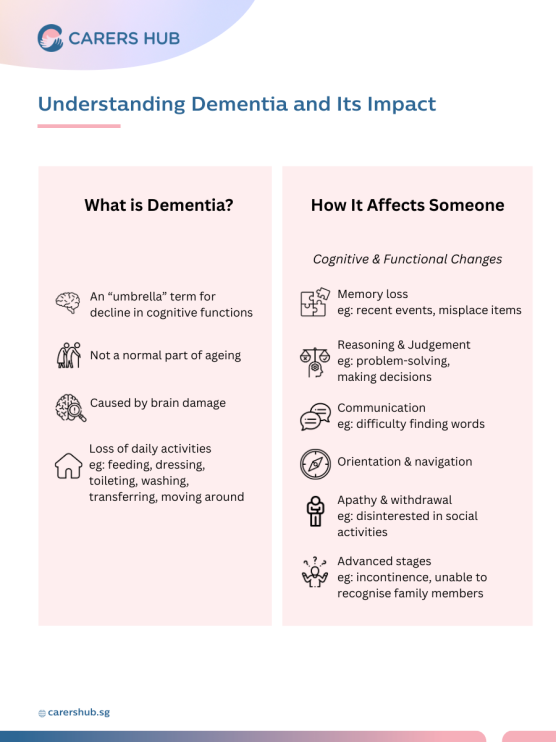
Caring for a person living with dementia begins with understanding the condition itself. Dementia is not a single disease, but a complex syndrome.
Understanding how it affects your loved one is essential for providing compassionate, appropriate and effective care.
What is Dementia?
Dementia is an umbrella term used to describe a group of symptoms characterized by a decline in cognitive function which is the ability to process thoughts – beyond what is expected from normal biological ageing.
When a person has dementia, their brain gradually loses its ability to perform everyday tasks, such as reasoning, judgement, thinking, memory, planning, orientation and navigation. Changes in behaviour and personality may also occur.
Although dementia is more common in older adults, it is important to note that dementia is not a normal part of ageing. It is caused by various diseases or injuries that damage brain cells over time. The specific symptoms experienced depend on which areas of the brains are affected.
What Causes Dementia?
The most common cause of dementia is Alzheimer's Disease, accounting approximately 60-70% of cases globally. Other common types include vascular dementia, Lewy body dementia, and frontotemporal dementia.
Risk factors for developing dementia includes increasing age, high blood pressure, high blood sugar, obesity, smoking, physical inactivity, social isolation, and depression.
Why Dementia Matters – Impact on Individuals, Families and Communities
Currently, there is no cure for dementia, as it is typically progressive and irreversible. However, interventions can help maintain quality of life and promote well-being such as, staying physically active and engaging in social interactions which will help in stimulating the brains.
Most people living with dementia will require long-term care, often provided by family members or caregivers.
Caring for a person living with dementia can be challenging. Recognising the symptoms and understanding the condition can help caregivers anticipate challenges, access appropriate resources, and set realistic expectations.
In addition, it is equally important to prioritise caregiver’s own health and well-being. Doing so enables them to provide better support while planning sustainably for future needs.
References:
- www.dementiahub.sg/what-is-dementia/what-is-dementia/
- https://www.who.int/news-room/fact-sheets/detail/dementia?c=MY2024&
tags: dementia, alzheimer disease
You may also like
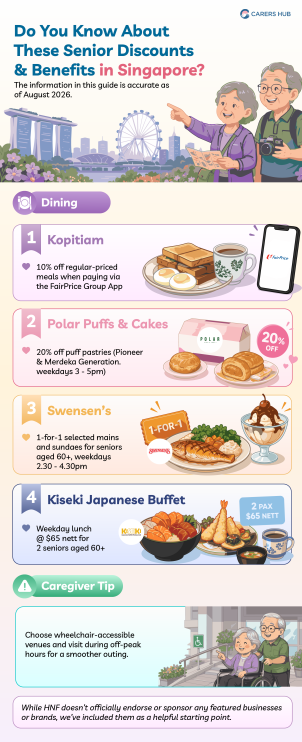
Senior Citizen Discounts and Benefits in Singapore: Dining
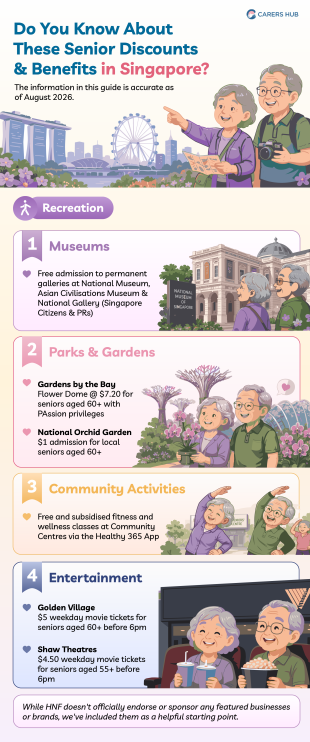
Senior Citizen Discounts and Benefits in Singapore: Recreation