+ points earned!
What are BADLs and IADLs?
- 05 March 2026
- Kai Ying from Methodist Girls' School
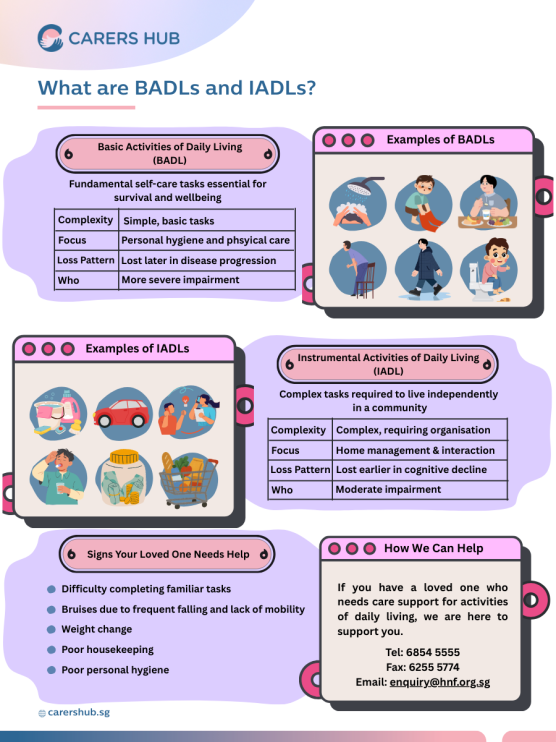
Understanding Activities of Daily Living (ADLs)
Activities of Daily Living (ADLs) are essential tasks that enable a person to live independently and maintain basic well-being. Some individuals may need temporary assistance, while others require lifelong support.
ADLs are generally grouped into two categories:
- Basic Activities of Daily Living (BADLs)
- Instrumental Activities of Daily Living (IADLs)
Basic Activities of Daily Living (BADLs)
BADLs are fundamental self-care tasks necessary for survival and physical functioning.
Examples include:
- Bathing: Using supplies to wash and dry the body using appropriate motion like standing, squatting
- Dressing: Selecting and putting on clothesin the correct order including prosthetics, braces or other surgical appliances, where needed
- Feeding: Chewing, swallowing and using utensils to eat
- Transferring: Moving between positions (e.g. bed to wheelchair)
- Mobility: Walking, sitting, standing
- Toileting: Managing bowel and bladder functions, positioning and hygiene
Instrumental Activities of Daily Living (IADLs)
IADLs are more complex tasks that support independent living and quality of life. Examples include:
- Housekeeping: Cleaning, laundry, and home maintenance
- Transportation: Driving or using public transport
- Communicating: Using phones or digital devices to stay connected
- Managing finances: Budgeting, paying bills and handling expenses
- Shopping: Planning, selecting and purchasing items
- Medication Management: Taking the correct medication and correct amount at the right time
Difference Between BADLs and IADLs
While BADLs are essential for basic self-care and functional living, IADLs can influence independence and overall quality of life.
A person's needs may change over time. Some may first struggle with IADLs and later require help with BADLs as the condition progresses.
Why ADLs Matter
A decline in physical functioning may arise from various factors, particularly ageing, which can affect an individual's ability to perform ADLs independently. Common contributing factors to such limitations include:
- Musculoskeletal, neurological or other physical health conditions
- Cognitive or mental decline
- Adverse effects of medication
- An individual's daily lifestyle and routine
The ability to manage ADLs is essential for independent living. Difficulties in carrying out these activities often signal underlying physical or cognitive decline.
Having these abilities are important because they support:
- Independent living and self-care
- Safety and health including the prevention of injuries and falls at home
- Maintaining control over one’s personal life
- Overall quality of life
Signs Your Loved One May Need Help
Many older adults hesitate to ask for help due to embarrassment, a desire not to burden loved ones, or a lack of awareness of their declining abilities.
Signs that indicate help me be needed include:
- Difficulty completing familiar or routine tasks
- Unexplained bruises from frequent falls or reduced mobility
- Weight changes, often seen in older adults who become sedentary due to mobility issues or difficulty feeding themselves
- Poor housekeeping, reflecting reduced ability or mobility to perform household chores
- Poor personal hygiene, such as difficulty bathing or dressing independently
How Are ADLs Assessed?
Healthcare providers assess ADLs through direct observation, caregiver input or both. For each ADL, individuals may range from being fully independent to completely dependent on others.
ADLs are assessed based on the level of assistance required:
- Independent: Completes tasks safely without assistance
- Modified independence: Completes tasks independently but requires assistive devices or additional time
- Supervised: Completes tasks without physical assistance but requires verbal cues or supervision
- Contact guard: Requires someone to be within reach occasionally for safety
- Minimal assistance: Requires a small amount of help (up to 25%)
- Moderate assistance: Requires some help (up to 50%)
- Maximal assistance: Requires significant help (up to 75%)
- Dependent: Requires total assistance and is unable to participate due to physical or cognitive limitations
Depending on the degree of assistance, healthcare providers may recommend:
- The use of assistive devices or equipment for daily tasks or mobility
- Home modifications to improve safety and accessibility
- Engaging a caregiver for additional support
- Exploring alternative living arrangements, such as assisted living or nursing homes
If you observe these signs or conditions, please seek medical attention for proper diagnosis and treatment. Therapists may be referred to support rehabilitation goals and optimise functional abilities.
References:
- Activities of Daily Living (ADLs): Signs a Loved One Needs More Help. (2023, May 3). NTUC Health Elderly Care. https://ntuchealth.sg/elderly-care/resources/health-and-wellness/activities-of-daily-living-adls-signs-a-loved-one-needs-more-help
- Cleveland Clinic. (2024, August 15). Activities of Daily Living (ADLs) and Instrumental Activities of Daily Living (IADLs). Cleveland Clinic. https://my.clevelandclinic.org/health/articles/activities-of-daily-living-adls
- Edemekong, P. F., Bomgaars, D. L., & Levy, S. B. (2025, May 4). Activities of Daily Living (ADLs). NCBI; StatPearls Publishing. https://www.ncbi.nlm.nih.gov/books/NBK470404/
- BScOT, A. S. (2023, June 19). The Levels of Assistance in Occupational Therapy: What to Know. Myotspot.com. https://www.myotspot.com/levels-of-assistance-in-occupational-therapy/
tags: activities of daily living, mobility
You may also like

Senior Citizen Discounts and Benefits in Singapore: Dining

Senior Citizen Discounts and Benefits in Singapore: Recreation