+ points earned!
Common Healthcare Acronyms and What do They Mean
- 04 March 2026
- Alexandra from Methodist Girls' School
Understanding Healthcare Acronyms
Healthcare acronyms are specialised terms used by medical professionals to communicate complex information quickly and accurately, especially in fast-paced environments within the healthcare industry. While these abbreviations help streamline communication among healthcare teams, they can sometimes be confusing for patients and caregivers. Understanding common acronyms can bridge this gap and empower patients to better understand their care plans.
Common Healthcare Acronyms
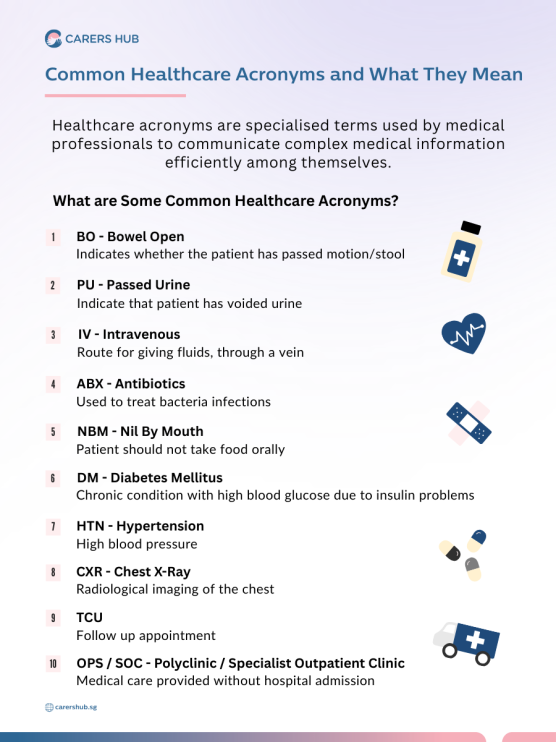
- BO – Bowel Open
Indicates whether a patient has passed stool, helping medical staff monitor digestive function.
- PU – Passed Urine
Refers to urination, an important indicator of kidney function and hydration. For example, reporting ‘Patient PU ×3 overnight,” means the patient urinated three times during the night.
- IV – Intravenous
Medication or fluids administered directly into a vein, usually via a drip. Examples include saline, antibiotics, electrolytes etc.
- ABX – Antibiotics
Medications prescribed to treat certain bacterial infections. Some examples of antibiotics include penicillin and amoxicillin.
- NBM – Nil by Mouth
Indicates the patient must not consume food or drink orally, often before surgery or certain tests. For example, before an endoscopy, the patient will be reminded to remain “NBM” from midnight to ensure an empty stomach during the procedure.
- DM – Diabetes Mellitus A chronic condition where blood sugar levels are high due to insulin issues.
Type 1 diabetes: Body cannot produce insulin.
Type 2 diabetes: Body resists insulin.
- HTN – Hypertension
High blood pressure, a common long-term health condition that can lead to complications like stroke, heart attack, kidney failure and vision problems if untreated.
- CXR – Chest X-Ray
A radiological scan of the chest to examine lungs, heart, and chest wall, often used for infection detection or monitoring.
- TCU
Indicates a follow-up appointment at a hospital or clinic.
- OPS/SOC – Polyclinic/Specialist Outpatient Clinic
Medical care provided without hospital admission, such as polyclinics, public hospitals, rehabilitation centres, specialist clinics etc.
Why It Matters
While acronyms are essential for healthcare professionals, they can feel overwhelming for patients. Learning their meanings improves communication, helps patients feel informed, and supports better decision-making during care discussions.
To learn more, please visit the SingHealth website for more information.
https://www.singhealthdukenus.com.sg/content/dam/singhealth-web/amc/imported-assets/assets/ipsq/documents/20191015%20SPAN%20Plain%20Eng%20Glossary%20Final%20%28web%29.pdf
tags: resources, tips, discharge summary
You may also like
Never Miss a Dose: Medication Schedule Management Tips for Caregivers + Free Template
5 Simple Home Changes to Help Your Elderly Loved Ones Age Safely