+ points earned!
What To Do If My Loved One Pulls Out Their NGT
- 06 March 2026
- Kai Ying from Methodist Girls' School
What To Do If My Loved One Pulls Out Their NGT
When a loved one pulls out their nasogastric tube (NGT), it can be an unexpected situation requiring prompt but calm action. Whether removed accidentally or intentionally, knowing the proper steps to take can help ensure your loved one’s safety and comfort as you seek appropriate medical guidance.
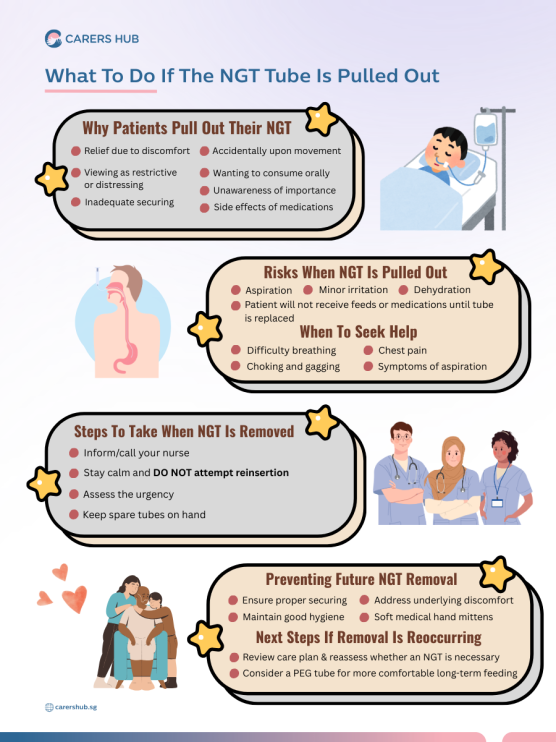
Why Do Patients Pull Out Their NGT?
Understanding why patients remove their NGT can help you respond with empathy and take preventive measures.
Reasons why the NGT may be pulled out:
- For relief – uncomfortable and irritating, causing sensations of gagging or nasal discomfort
- Viewing it as restrictive or distressing due to sense of dignity
- Inadequate securing – loose tape may cause the tube to slip out more easily during normal activities
- On accident during sleep or due to movement
- Wanting to consume food orally
- Not realising its importance – patients with confusion or dementia
- Side effects of medications
Recognising these underlying causes helps caregivers address the root issue and provide more effective care.
Risks when NGT is pulled out
Potential risks that could arise due to an NGT being pulled out:
- Aspiration: If tube is pulled out during feeding, the feed or stomach contents in the throat could be inhaled into the lungs
- Can cause minor irritation
- The patient won’t receive prescribed feedings or medications until the tube is replaced
- Dehydration
Immediate steps to take when the NGT is removed:
- Inform your nurse as soon as possible
- Stay calm and DO NOT attempt reinsertion: Reinserting the NGT requires proper training. If the tube is pulled out halfway, gently and slowly remove it completely to prevent discomfort or injury
- Assess the urgency: If the NGT is removed during nighttime hours, you may wait until morning to contact your nurse. Check when the last feed was given to determine how urgent reinsertion is needed
- Keep spare tubes on hand: It is advisable to have more than one replacement tube stored at home for such situations
Do note that it is safe to miss one feed if necessary.
When to seek help
Most NGT removals are not medical emergencies, but certain situations require immediate attention.
It is important to seek help if your loved one experiences:
- Significant difficulty breathing
- Choking and gagging
- Severe chest pain
- Or you are concerned that you have inadvertently got feed into the windpipe
These symptoms or concerns could indicate that stomach contents have been aspirated into the lungs during the removal. For non-emergency cases where your loved one is stable, contact their primary healthcare provider for guidance on next steps. They will advise whether the tube needs immediate reinsertion or if it can wait until the next scheduled visit.
Preventing future NGT removal
The NGT will be firmly secured with tape, to the side of the patient’s face to reduce the risk of them pulling it out. It can be secured behind their neck so that it doesn't dangle in front of them. However, some may still attempt to remove it.
Additional prevention can significantly reduce the likelihood of repeated tube removal while maintaining your loved one’s comfort.
- Ensure proper securing: Check daily that the tape remain intact and positioned correctly and that it is not pulling on the skin
- For patients with confusion or dementia, consider soft medical hand mittens
- Address underlying discomfort: Work with healthcare professionals to manage symptoms like nausea, irritation or discomfort
- Maintain good hygiene: Cleanliness can reduce discomfort, making patients less likely to remove the tube
If your loved one pulls out the tube repeatedly, here are some next steps to consider:
- If your loved one is not alert and frequently removes the tube, it may be time to review their care plan and reassess whether tube feeding aligns with their wishes. A speech therapy assessment can help determine if the feeding tube is still necessary or if alternative feeding methods are also possible. This decision should be made collaboratively by caregivers, patient and healthcare providers.
- A Percutaneous Endoscopic Gastrostomy (PEG) tube which may be a more secure and comfortable option for long-term feeding. However, not every patient is suitable for this surgery and will require a doctor to assess your loved one’s medical condition and health to determine if it is appropriate.
Supporting your loved one
The experience of pulling out and reinserting an NGT can be distressing for both patients and caregivers. Provide comfort through your presence, reassuring words and physical comfort and remember to take care of your own emotional well-being as well. If tube removal becomes a reassuring issue, it is advisable to discuss alternative feeding options with your doctor.
Acknowledgments:
Home Nursing Foundation Nurse Thiru for taking the time to answer interview questions
References:
- NHS. (2022, January 7). Nasogastric feeding tube. Kent Community Health NHS Foundation Trust. https://www.kentcht.nhs.uk/leaflet/nasogastric-feeding-tube/
- Pulling out tubes | Hartford Institute for Geriatric Nursing. (n.d.). Hign.org.
https://hign.org/consultgeri/resources/symptoms/pulling-out-tubes
tags: caregiving tips, resources, NGT, prevention
You may also like
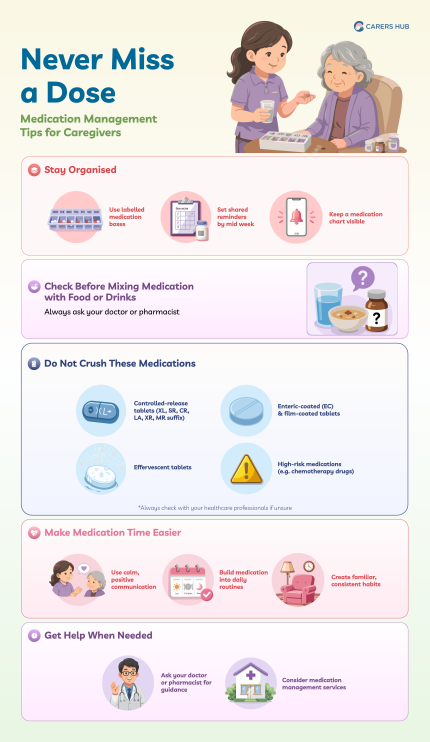
Never Miss a Dose: Medication Schedule Management Tips for Caregivers + Free Template
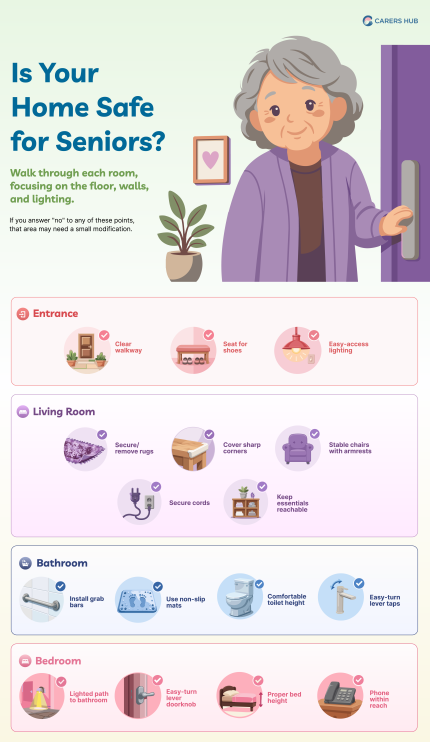
5 Simple Home Changes to Help Your Elderly Loved Ones Age Safely