
 + points earned!
How to Train a Domestic Helper for Caregiving in Singapore
- 17 July 2026
- Home Nursing Foundation
Caregiving is a multi-faceted commitment that includes physical and emotional support for both the care recipient and caregiver. If you’re part of a family looking after elderly parents at home, you may find yourself hiring a domestic helper for elderly care when you’re unable to do so because of work and the need for rest.
Some families may feel uneasy about leaving their loved one in the care of a foreign live-in caregiver and may wonder how to manage a domestic helper at home. If you’ve felt this way before, know that this worry is completely understandable.
We’re sharing some tips you may use to build a better working relationship between you, your family and your foreign domestic helper.
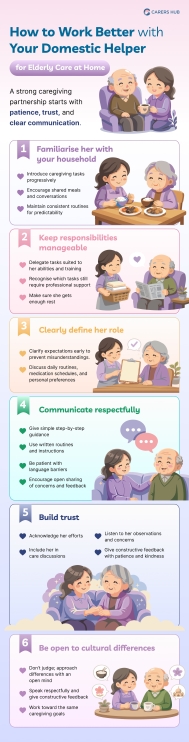
Tip #1: Familiarise her with your household
Help your domestic helper gradually adjust to your household’s routines and people.
- Slowly ease her into caregiving responsibilities: Introduce tasks progressively, rather than expecting her to manage everything at once. This helps her build confidence and adapt at a steady pace.
- Familiarise her with your neighbourhood: Knowing her way around the neighbourhood is useful if she needs to buy groceries from the supermarket downstairs or take your loved one to a nearby hawker centre.
- Encourage shared meals and conversations: Get to know her better through simple interactions like chatting with your family over dinner. For instance, you can ask her about her family and her hometown.
- Stick to consistent routines: Having a predictable daily schedule, especially in the initial weeks, can help both your domestic helper and loved one feel more comfortable and settled with each other.
Tip #2: Delegate tasks effectively
Caregiving can be physically and emotionally demanding, so it’s important to recognise that your domestic helper also has limitations.
- Understand what can be delegated: Some tasks may still require your direct involvement or professional nursing support. For example, your loved one may not be comfortable with letting the domestic helper help them shower.
- Ensure responsibilities are manageable: Delegate tasks that align with her abilities and training. Taking on too many caregiving duties can become overwhelming over time, particularly when she needs to learn on the job.
- Ensure she gets enough rest: Adequate rest supports her well-being and enables her to provide the best possible care for your loved one.
- Under MOM laws, she is entitled to one rest day per week. If she works on her rest day, you must compensate her with at least one day of salary.
- As an employer, you must also provide for her medical needs, which includes all medical costs, including hospitalisations, six-monthly medical examinations, medical and personal accident insurance.
You may refer to MOM’s employer guide for the mandated rest days and medical care for your foreign domestic helper.
Tip #3: Clearly define her role
Your foreign domestic worker’s role will usually extend beyond household chores to include caregiving responsibilities such as:
- Helping with daily movement and light exercises
- Support with dressing and hygiene
- Preparing meals and helping with feeding
- Administering medication when required
- Providing companionship and emotional support
Unlike regular domestic work, caregiving involves balancing daily supervision with emotional care and support. The extent of help required also depends on how much assistance your loved one needs with BADLs and IADLs (read more about them here).
Clarifying these responsibilities early helps everyone avoid confusion and frustration further down the line, as unclear expectations can create tension and resentment.
When setting expectations, remember to cover:
- Daily routines: Clarify meal times, sleep schedules, bath times, and any regular exercise or therapy routines.
- Medication schedules: Specify medication dosages, timings, and what to do if a dose is missed.
- Mobility assistance needs: Explain whether your loved one needs help with walking, stairs, or mobility aids, including any fall-risk precautions.
- Personal needs and preferences: Share dietary restrictions or preferences, communication styles, and personal habits that help your loved one feel comfortable and respected. For example:
- Favourite food to cook at home or buy from the hawker centre near your house.
- Favourite activities, like watching a TV show at a certain time, or drinking warm tea before bed. Small details help your loved one feel cared for.
- If your loved one has cognitive or hearing difficulties, you can teach your domestic helper simple gestures or written notes that she can use to communicate with them.
- Emergency procedures: Explain what to do in the event of a fall or sudden change in health, and provide emergency contact information in case she needs to get immediate help.
- How to navigate conflicting requests: Since she is working with both you and your loved one, establish a method for her to handle conflicting information or disagreements. For example, you could let her know to check with you first on certain decisions requested by your loved one before taking action.
Tip #4: Practice respectful communication
Practice open communication with your domestic helper and loved one - this can be in the form of encouraging them to share their challenges and feedback freely with you, and vice versa. Doing so prevents small misunderstandings from escalating over time.
These methods can also help you when communicating with her:
- Provide simple, step-by-step guidance on each task, paired with hands-on demonstration and guided practice.
- Create a daily care log with pictures for your domestic helper to record medication, meals, and any other notes (download Caregiver Helper Routine Checklist).
- It might help to make the care log bilingual by including simple written instructions in your domestic helper's first language, such as Bahasa Indonesia, Tagalog, or Burmese, alongside English.
- If your loved one does not speak English and prefers another language, e.g., Malay, Mandarin, or a Dialect, you can also include some phrases alongside the English instructions so your domestic helper can use them with your loved one.
- Be patient with language barriers.
- Give your domestic helper time to familiarise herself with routines and caregiving tasks.
- If you are installing CCTV cameras for security or monitoring at home, make sure to inform your helper of where all the cameras are. Try to confine them to common areas such as the living room, kitchens, and entrances. You should not install them in areas that may compromise her privacy or modesty, such as in the bathroom or her sleeping/changing area. This strikes a balance between transparency and respecting her privacy.
Tip #5: Build trust
A healthy, long-term collaboration needs trust between both you and your domestic helper. It’s understandable to feel the need to check in frequently at first, but over time, try to reduce micromanagement and maintain a respectful tone when communicating with her. This gives her space to grow confident in working independently.
People who feel respected and trusted are more likely to be motivated and engaged, and the same goes for your helper. Remember that emotional burnout can affect patience and the quality of care, so ongoing support and encouragement are equally important.
These are some simple ways to foster trust and mutual respect:
- Acknowledge her efforts, especially when she goes the extra mile to support you and your loved one.
- Include her in family care discussions where suitable so she feels involved and informed.
- Listen to her concerns and observations, as she is closely involved in your loved one’s daily care and may notice small changes or challenges that others may not immediately see. For instance, she might notice early bedsores or subtle changes in grip strength.
- Give constructive feedback with patience and kindness, especially when she is still learning caregiving routines or adapting to your household’s needs.
Tip #6: Navigate cultural differences with sensitivity
Your domestic helper may come from a culture with different approaches to personal boundaries and communication styles. You can navigate these differences with patience and empathy:
- Approach it with openness: Rather than judging or dismissing her cultural differences, take time to understand her perspective and caregiving approach. Recognising positive aspects of her culture can help foster mutual respect and strengthen her caregiving skills. For instance, coming from a close-knit culture back home may help her warm up more naturally and build a stronger rapport with your loved one.
- Create a harmonious household environment: Everyday interactions, such as speaking respectfully and giving constructive feedback, can help build a more positive and inclusive caregiving environment.
- Work towards the same goals: Despite cultural differences, you and your domestic helper share the goal of ensuring your loved one is comfortable and well cared for. Focus on this shared purpose to strengthen collaboration.
Caring for a loved one at home with a domestic helper is a shared journey that requires patience, communication, and mutual understanding.
By building trust, setting clear expectations, and supporting your domestic helper with empathy and respect, you can create a more positive and sustainable caregiving environment for everyone involved.
References:
https://www.msig.com.sg/blogs/house-rules-maid
https://www.thechillmom.com/2022/01/hiring-a-maid-in-singapore-4-ways-to-be-a-responsible-employer/
https://www.reddit.com/r/askSingapore/comments/1kidixy/hiring_domestic_helper_to_care_for_elderly/
https://www.nation.sg/caregiver-vs-maid-whats-the-difference-for-elderly-care-in-singapore/
You may also like
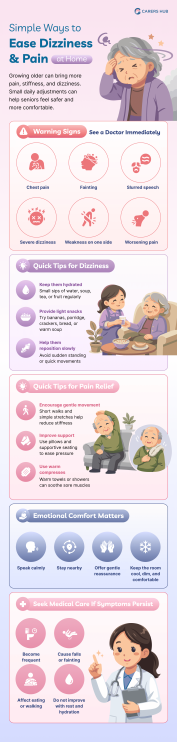
What Are Non-Medical Pain Relief Options for The Elderly?
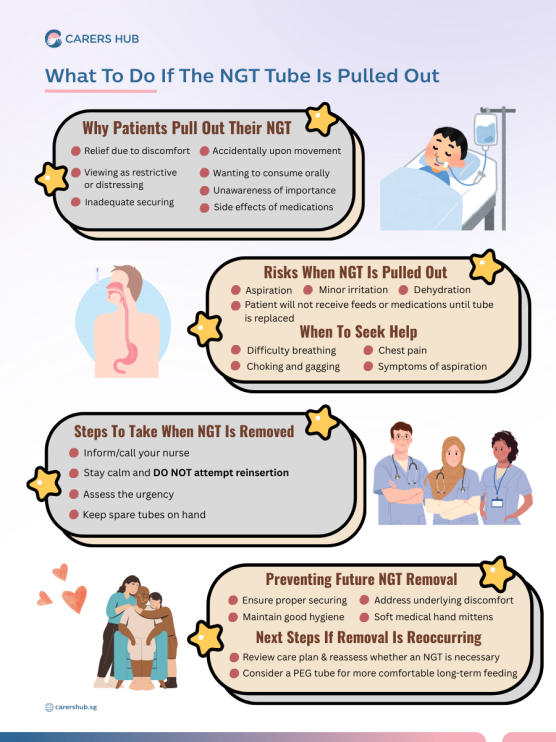
What To Do If My Loved One Pulls Out Their NGT